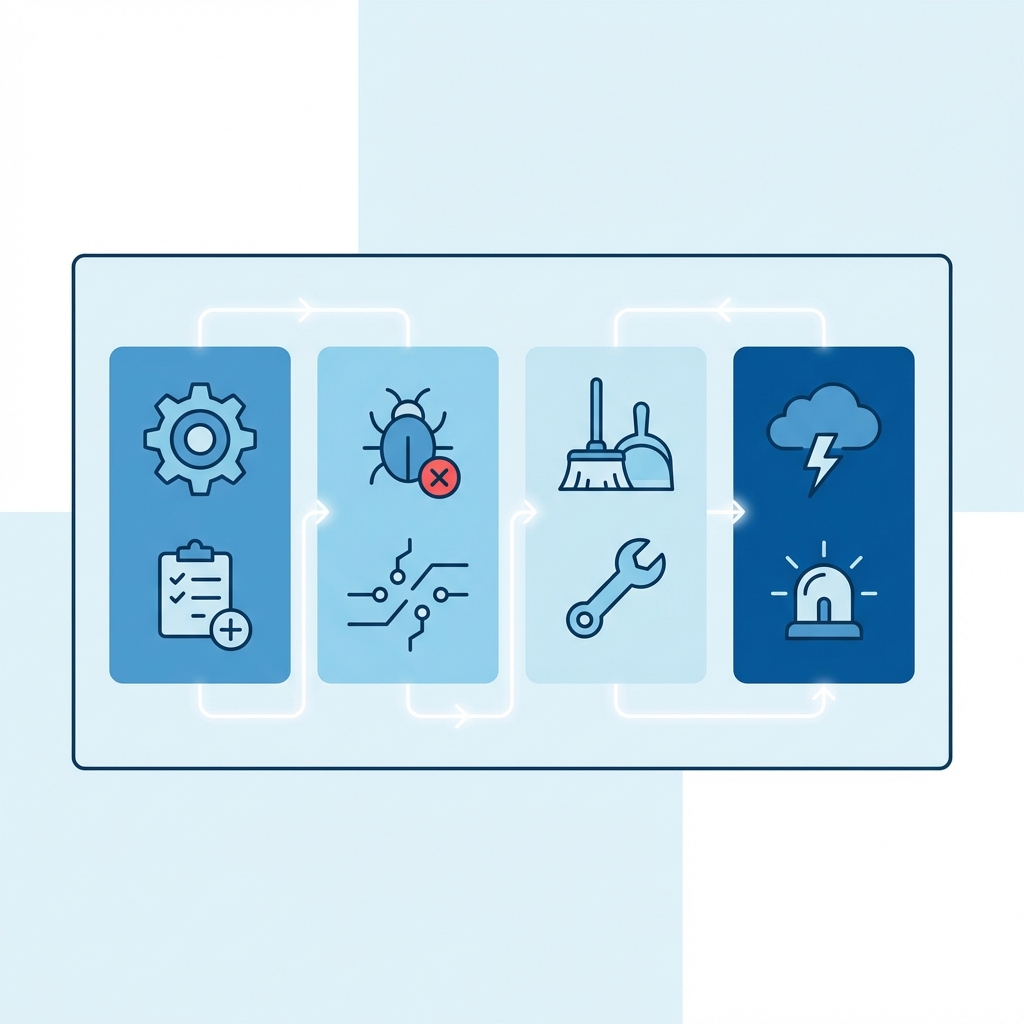
The 4 Types of Work: Why Your Roadmap is Always Late
You planned the sprint perfectly. You estimated the points. You started Monday with hope. By Friday, you missed the deadline. Again.
Why? Because you only planned for Value Demand (new features). You forgot about the other 3 types of work that actually fill your day.
If you don't categorize your demand, you cannot manage it.
1. Value Demand (The Good Stuff)
This is what customers pay for.
- "Build the Login Page."
- "Add Apple Pay support."
- "Optimize the Search."
Goal: Maximize this. (Ideally > 50% of capacity).
2. Failure Demand (The Silent Killer)
This is work caused by previous bad work.
- "Fixing a bug in the Login page."
- "Rerunning a failed build."
- "Answering a support ticket because the UI is confusing."
Failure Demand is waste. It adds zero value. It simply restores the system to the state it should have been in. If your team is spending 40% of time on Bugs, you don't need "more features." You need Quality.
Mentor Tip: Track "Failure Demand" separate from "Bugs." If a bug was caused by a release yesterday, that is Failure Demand. It means your process is leaking.
3. Failure Avoidance (Maintenance)
This is work done to prevent future failure.
- "Upgrading the Database before it runs out of disk space."
- "patching security vulnerabilities."
- "Writing a backup script."
This is Insurance. You hate paying it, until your house burns down. Goal: Keep this steady (10-15%). Don't skip it, or it becomes Failure Demand (Crisis).
4. Value Enablement (Improvements)
This is work that makes future work faster.
- "Improving the CI pipeline (10 mins -> 2 mins)."
- "Writing documentation."
- "Refactoring a messy module."
This is Leverage. Investing 1 day here saves 100 days later.
How to Balance the Books
Most teams look like this:
- Value Demand: 80% (Planned)
- Failure Demand: 40% (Surprise!)
- Total: 120% (Burnout)
The Healthy Team Mix:
- Value: 50%
- Enablement: 20% (Sharpening the saw).
- Avoidance: 10% (Maintenance).
- Failure: < 20% (Bugs).
Summary
Next time you plan a sprint, ask: "How much Failure Demand did we have last week?" Subtract that from your capacity before you add new features.
- Kill Failure Demand (Root Cause Analysis).
- Invest in Enablement (CI/CD, Tools).
- Respect Maintenance (Don't let the roof leak).
- Then, and only then, build Features.


